
I have never met a school leader who was surprised that behavior showed up in August.
The surprise is usually where it shows up first.
It shows up during transitions. It shows up in the first ten minutes of class. It shows up when students are asked to work independently. It shows up when adults are unclear about what response should come next.
By the time behavior becomes a referral pattern, it has usually been giving us information for weeks.
Education Week reported this month that 75 percent of educators expect student behavior to be a challenge this school year. RAND's 2026 teacher well-being data also continues to show that teachers are carrying higher levels of stress and burnout than similar working adults.
When behavior concerns rise and teacher stress remains high, leaders have to treat the first month as system-building time.
Student behavior is an instructional condition. It shapes teacher energy, classroom momentum, student belonging, and the amount of time available for learning.
If leaders wait until behavior becomes disruptive enough to demand attention, teachers will already be carrying too much of the system by themselves.
The Leadership Move
The beginning of the year should not be a hope-and-react season.
It should be a behavior reset.
Not a crackdown. Not a new poster campaign. Not a long handbook review that students forget by the second week.
A real reset means adults agree on the routines, teach them clearly, practice them consistently, and respond in ways that build trust while protecting instruction.
The Center on PBIS describes effective behavior support as predictable, positive, and equitable. The What Works Clearinghouse also points educators toward prevention, classroom environment, and explicit behavioral supports as part of reducing behavior problems.
Students need to know what success looks like before adults respond to what went wrong.
The 30-Day Behavior Reset Framework
Use the first month to make routines visible, adult responses clear, and support consistent.
- Name the patterns. Start with the behavior that is actually interrupting learning. Is it transitions, phone use, refusal, peer conflict, hallway movement, attendance, or low engagement? Do not label the whole school as out of control. Name the pattern.
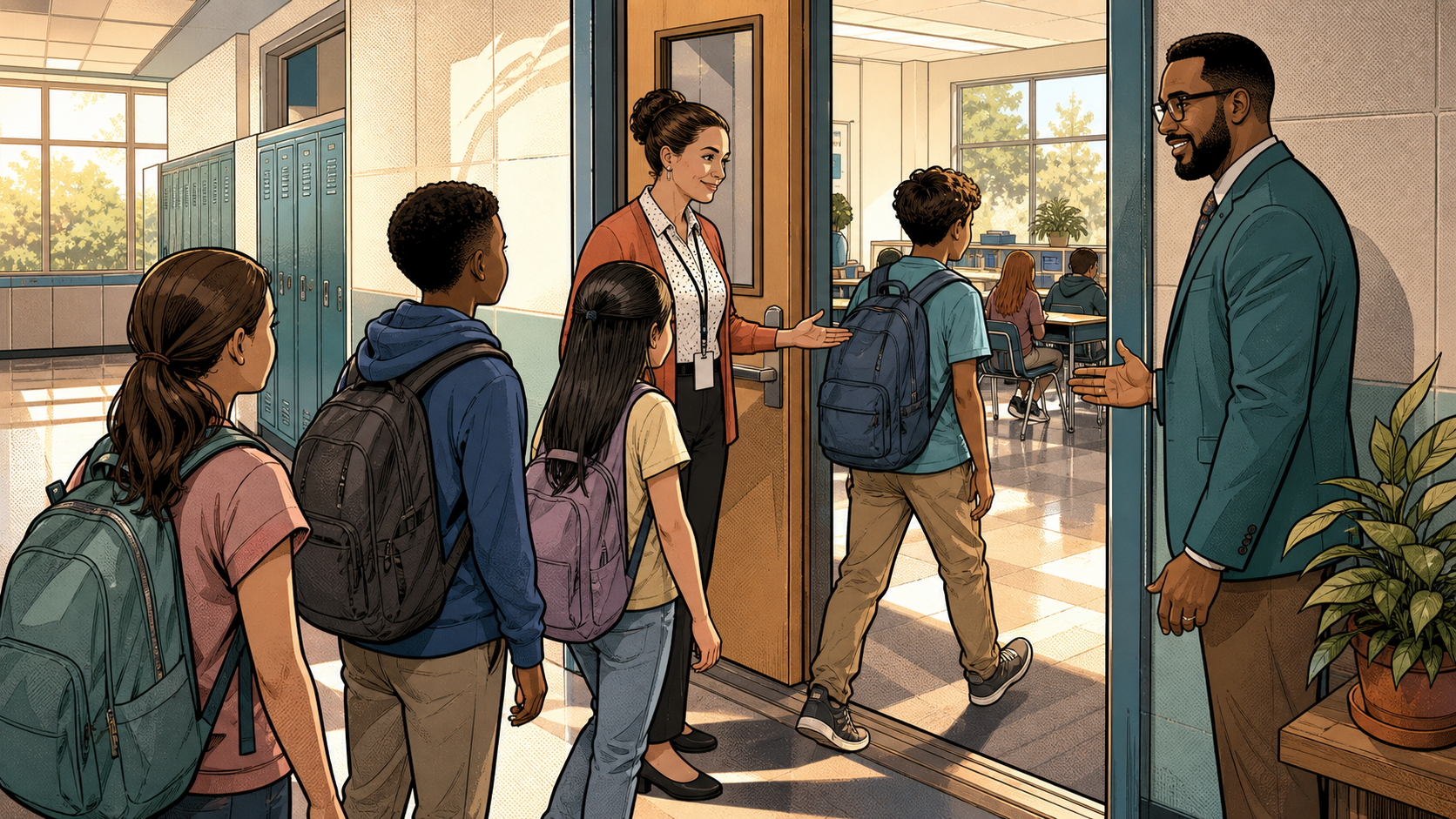
- Teach the routine. If students are expected to enter, discuss, transition, ask for help, work in groups, use technology, or respond to redirection in a certain way, they need to be taught that routine. Expectations are not the same as instruction.
- Align adult responses. Teachers should not have to guess what happens next. Leaders need to define what is handled in the classroom, what gets documented, what needs support, and what requires an administrator or counselor.
- Protect repair. A behavior system without repair becomes a compliance system. Students need a way back into the classroom community after conflict, correction, or removal. Repair protects relationships and keeps students connected to learning.
- Follow through. The first month tells teachers whether the system is real. If leaders say behavior is a priority, teachers need to see hallway presence, quick follow-up, consistent communication, and support after referrals.
What Leaders Can Do This Week
Walk the building with one question in mind:
Where are students most unclear about what adults expect?
Then ask teachers a second question:
Where do you feel like you are managing behavior alone?
Those two questions will tell you more than a generic behavior survey.
Look at entry routines. Look at passing periods. Look at lunch. Look at the first five minutes of class. Look at what happens after a student is redirected. Look at whether teachers are getting support before a pattern becomes exhaustion.
Choose one routine that affects the whole school. Teach it. Model it. Practice it. Reinforce it. Review it with staff after two weeks. Adjust what is not working.
Do not make the first behavior reset too broad. Schools do not improve consistency by launching ten expectations at once. They improve consistency when adults can say, "This is what we are doing, this is why it matters, and this is how we will support each other."
Closing
Behavior cannot be a back-to-school surprise.
Students are telling us where routines are unclear. Teachers are telling us where the system is too thin. Data is telling us that behavior and teacher stress are connected.
Leaders have a narrow window to respond before early patterns become the culture students and teachers expect.
A strong behavior system does not remove accountability. It makes accountability clearer, more consistent, and more humane.
When routines are taught, teachers can teach with more confidence.
When adults respond consistently, students experience school as predictable.
When leaders follow through, behavior becomes shared work instead of private teacher stress.
The first 30 days give schools a chance to build that reset before the year settles into habit.